Where bills from local lawmakers stand as session nears end
Published 3:30 pm Sunday, February 22, 2026



OLYMPIA — A key deadline in the 2026 legislative session came and went earlier this month, leaving just a few bills from local legislators still standing with a chance to become law.
Most bills proposed by the 19th Legislative District delegation did not survive the Feb. 17 house-of-origin cutoff — the date that most bills must be passed out of their original chamber to stay alive for passage that session. Working on the compressed even-year schedule where sessions last just 60 days, the Washington State Legislature has just two weeks left to complete its business.
Legislators from the 19th District put forth nearly two dozen bills either at the beginning and in the weeks leading up to this year’s session, or had bills that were first filed during the 2025 session and were reintroduced this year.
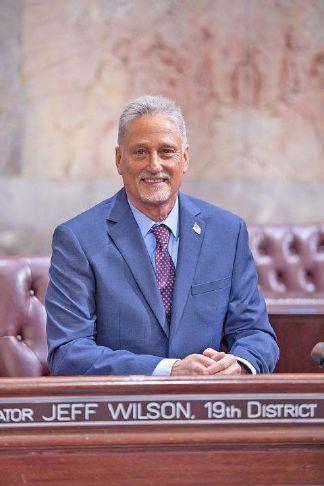
Not among the bills that were reintroduced this year was Senate Bill 5247, which state Sen. Jeff Wilson (R-Longview) sponsored during the 2025 session and would transfer ownership of the vacant, state-owned Naselle Youth Camp to the Chinook Indian Nation. Doing so would align with the recommendation a legislature-commissioned task force made in 2024 about what to do with the property in the wake of the camp’s closure.
Wilson previously told the Observer at the beginning of the year that he was not optimistic that the bill would be passed and signed into law this year. “There hasn’t been any movement on this bill, and it’s doubtful that this bill is going to get an opportunity to move forward this year.”
Still alive
A pair of bills sponsored by Wilson did survive past the cutoff date including Senate Bill 5552, which would direct the state Building Code Council to develop new rules specifically for kit homes. Kit homes are low-cost structures intended for residential use that are comprised of prefabricated walls, floors and roofs that are assembled on-site and are 800 square feet or smaller in size.
The intent of the bill is to speed up the design review process for kit homes, which can be used as accessory dwelling units (ADUs) or tiny homes. Wilson told his fellow senators that kit homes were once commonplace and can serve as a way to address the shortage of affordable housing in Washington.
Another bill related to kit homes sponsored by Wilson, Senate Bill 5249, would allow the use of kit homes as emergency housing — provided that the city or county requires the kit homes to be inspected at least every five years to ensure it meets sufficient life, health and safety standards. That bill passed the Senate Housing Committee in 2025 and was reintroduced this year, but did not receive a vote in the Senate by Feb. 17.
The other of Wilson’s bills to survive the cutoff was Senate Bill 5000, which would designate “The Evergreen State” as the official nickname of the state of Washington. The bill was first introduced in 2025 and unanimously passed the Senate, but did not receive a vote in the House.
First coined in the late 1800s due to the abundance of evergreen forests, “The Evergreen State” is engraved on Washington license plates, memorabilia sold at souvenir shops and was also inscribed on the U.S. memorial quarter in April 2007 honoring Washington state. It is generally accepted as reference to the state of Washington and has been considered by the Legislature for official designation, but has never been adopted.
The only other bill from a 19th District legislator to make the cut was House Bill 2235 from state Rep. Jim Walsh (R-Aberdeen). The bill passed the House on a near-unanimous 95-1 vote on Feb. 10, and a hearing was scheduled for Feb. 20 in the Senate State Government, Tribal Affairs & Elections Committee.
If passed and signed into law, the bill would expand the types of law enforcement records that are exempt under the Public Records Act to include records related to permits to purchase firearms, firearm transfers, and additional records concerning concealed pistol licenses. These newly exempted records could still be disclosed to law enforcement or corrections agencies, or to certain individuals for purposes of assisting courts in compliance with an order to surrender and prohibit weapons or an extreme risk protection order.
“This bill fills a clear gap in Washington’s public records law,” Walsh said in a news release after the bill passed the House. “Right now, someone’s most private details can be exposed simply for exercising a constitutional right. That’s something everyone — regardless of how they feel about firearms — should be able to agree is unnecessary and unsafe.”