Field of dreams: New farmers look to rejuvenate once-fallow cranberry bogs
Published 6:37 pm Sunday, March 8, 2026

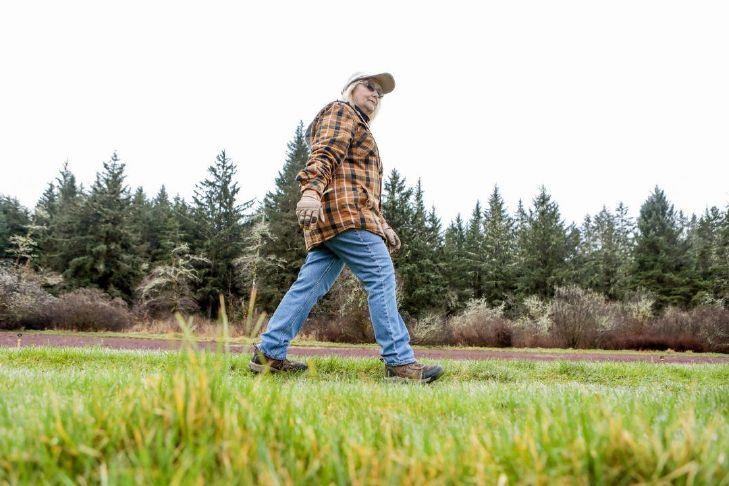
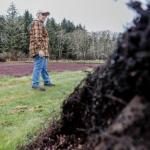
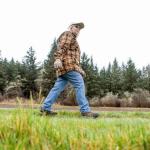
SEAVIEW — Tammy Conklin used a spade to spread and properly space the sprouted cranberry vines in the Seaview soil and spoke about what she hoped their growing family farm could become.
Today, more than 140 years after the first commercial cranberry bogs took root in Pacific County, the industry continues to bear fruit for a new generation of intrepid farmers willing to toil in the sandy soil.
CranBear Bogs
Among the newest, emerging family farms is CranBear Bogs, a six-acre cranberry farm along 40th Street in Seaview owned and operated by Tammy and Tim Conklin — including four one-acre bogs — who first purchased the farm in May 2023.
The husband-and-wife duo have undertaken an ambitious conversion of the bogs, including installing new irrigation systems, transitioning from from wet to dry harvesting and gradually introducing new cranberry varieties that are best suited for the fresh fruit market over the past three years.
The family-owned bog is among more than 20 cranberry farms on the Long Beach Peninsula, producing around 75,000 barrels of cranberries annually. Today, cranberries are the second highest crop in terms of acreage in Pacific County, accounting for 1,579 acres and generating more than $10 million in annual sales, according to the U.S. Census of Agriculture.
‘Investment of time and money’
Last April, with help from fellow cranberry growers, including Malcolm McPhail and crew from nearby CranMac Farms, the Conklins replanted one of their Seaview bogs with the Grygleski variety of cranberries, a hybrid variety developed by Wisconsin cranberry farmer Ed Grygleski in the 1970s to produce bigger fruit and larger yields than traditional cranberries.
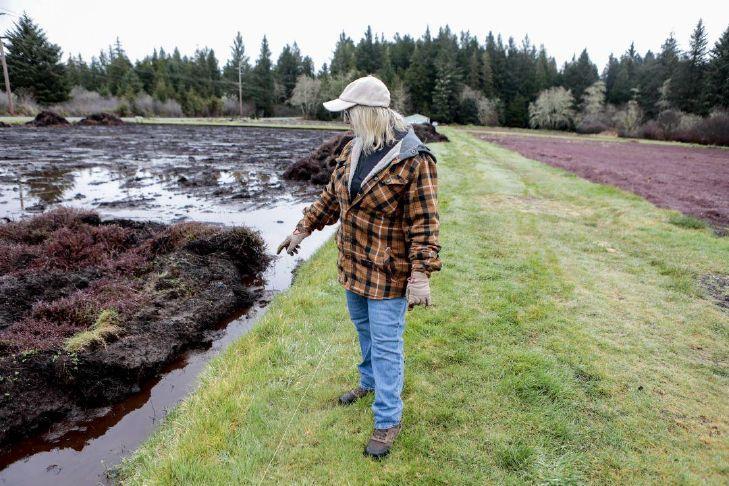
But before they could plant the vines in the sandy soil, they had to eradicate a noxious, invasive weed overtaking the bogs.
“It was all horsetail, an invasive, prehistoric weed that’s almost impossible to get rid of,” Tammy said. “Like any weed, it competes with what you’re trying to grow.”
After all the digging was done, more than 50 loads of sand were brought in to provide the proper substrate for the new vines to grow. Sprinklers and new drainage were installed, including a new ‘closed’ irrigation system that’s more environmentally friendly and will allow more effective use of herbicide than the previous antiquated ‘open’ system.
Still, it will still take three years or longer before those same vines, first planted in April 2025, to begin producing fruit. “It’s an investment of time and money,” Tammy said.
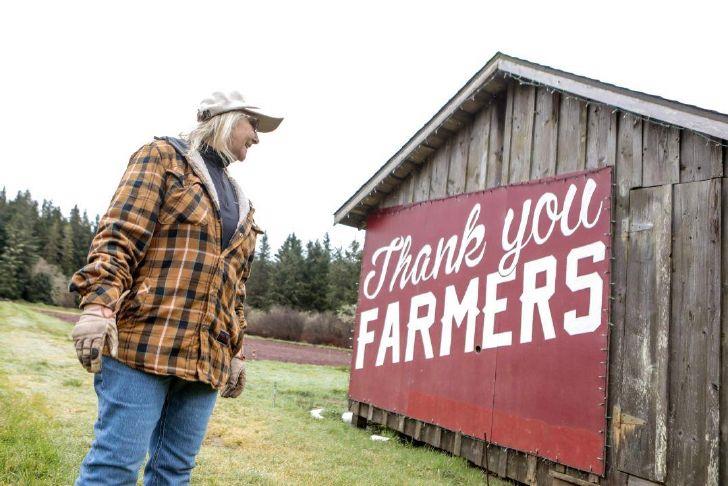
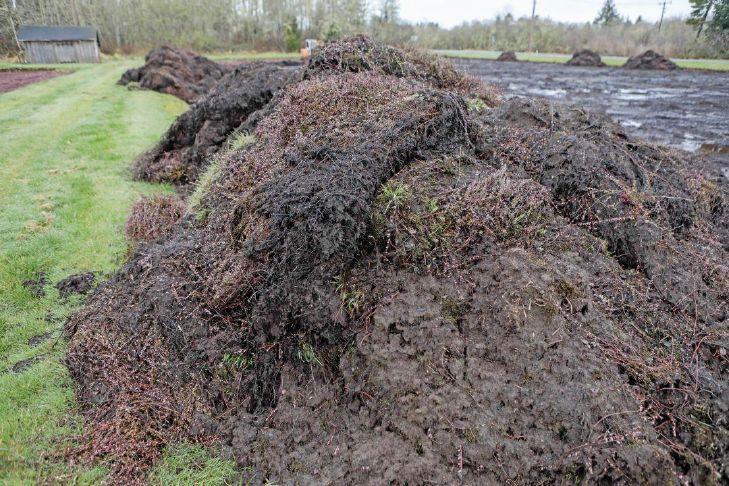
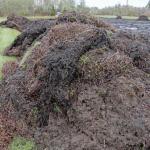
Over the winter, the Conklins turned their attention to another bog, located in front of the iconic ‘Thank You Farmers’ pump house near the west end of the farm. Mounds of twisted vines and sandy soil currently stand over six feet tall, but will soon be removed and replaced with new substrate and replanted with a new variety of cranberry vines, called Welkers, a high-yielding, early-to-mid season variety.
“They’re a little bit of an earlier (harvesting) variety, and they hold up really well as a fresh fruit,” Tammy said. “It’s just a really good, prolific berry. We’ll probably get 20,000 pounds to the acre on those, if not more, but it takes a while.”
Dry harvest
After wet harvesting their Seaview bogs the last two seasons, the Conklins intend to increasingly embrace roadside sales and the fresh fruit market, with plans to utilize more dry-harvesting methods. Dry harvesting is standard practice on the cranberry farms in north Pacific County.
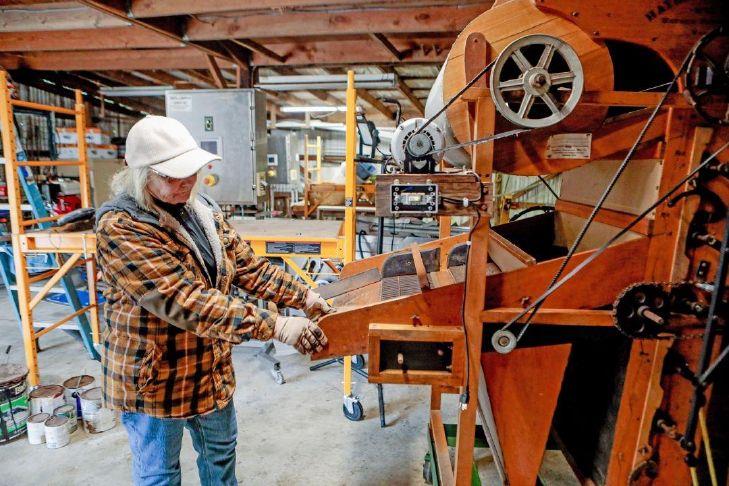
“We no longer flood harvest here, it’s all going to be a dry harvest,” Tammy said before detailing some of the unique machines used, including classic cranberry harvesting machines such as the Furford Picker, invented in 1957, which picks the fruit and prunes the vines, and the Hayden Separator, used for sorting cranberries.
“A bad berry will drop to the floor, because bad berries don’t bounce,” Tammy said regarding the Hayden Separator, first invented in 1900 but recently rebuilt and upgraded with a new, electric motor.
The Conklins have been working to retrain and trim vines that were previously wet harvested but will now be harvested more effectively with new methods and machinery.
“The berries were there, we just couldn’t get to them,” Tammy said regarding the dense vine growth. “But with time, we will train these. We started with just our little four-acre hobby farm, but now we’re up to 18 acres. I guess we have to call ourselves real farmers now.”
FYI: Cranberries in Pacific County
Entrepreneur Anthony Chabot is credited as the first to grow cranberries commercially on the Long Beach Peninsula, after planting imported vines from New Jersey in 1883, according to the Pacific Coast Cranberry Research Foundation. Today, cranberries are the second-highest crop in terms of acreage in Pacific County, accounting for 1,579 acres and generating more than $10 million in annual sales, according to the U.S. Census of Agriculture. CranBear Bogs is among more than 20 cranberry farms on the peninsula, producing around 75,000 barrels of cranberries annually.