‘Live in hope’: Resilient salmon fishermen reflect on past ahead of commercial season
Published 4:42 pm Sunday, March 1, 2026
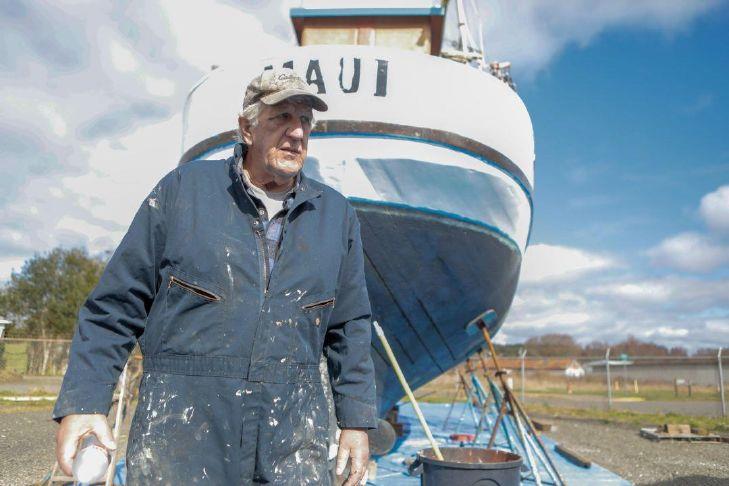
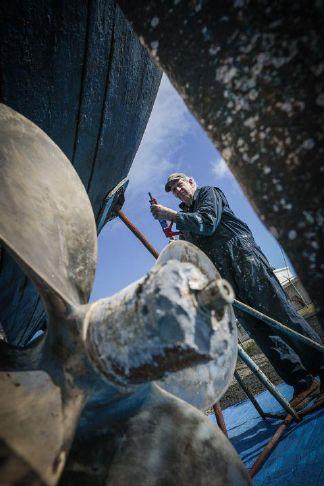
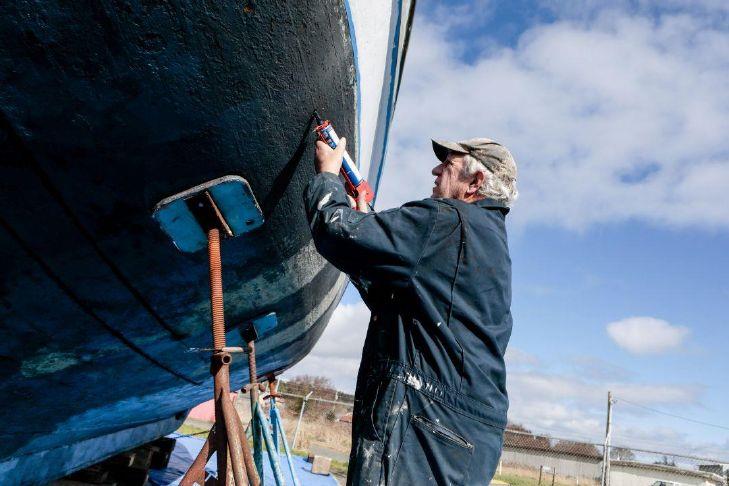
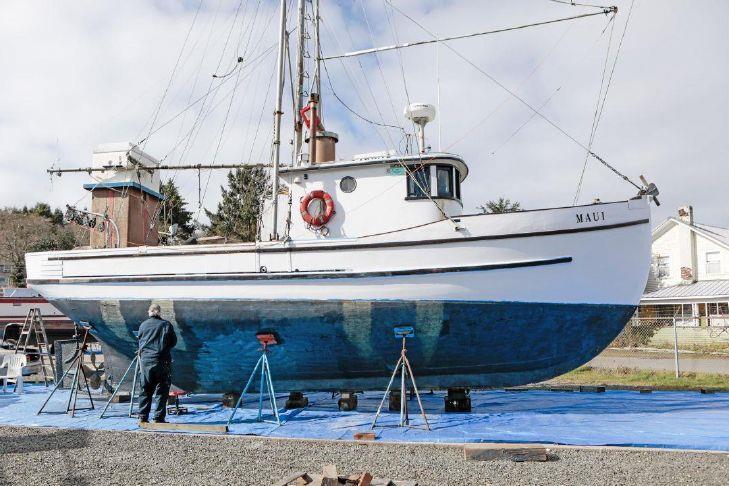
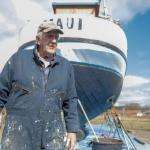
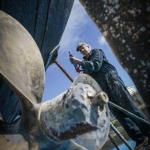


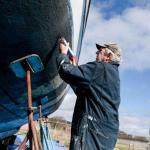
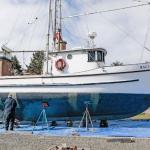
ILWACO — Scott Bayer narrowed his gaze as he slowly dragged the brush of black anti-fouling paint along the waterline of the 38-foot hull of the F/V Maui.
“This is the most important part,” Bayer said upon reaching the bow, pausing to inspect his work Thursday, Feb. 26, at the Ilwaco Boatyard. “It has to be perfect.”
It’s a familiar task for the 70-year-old commercial fisherman, but this season the annual maintenance necessary to keep his 1941 wooden troller in shipshape was a little trickier after losing dexterity in his hand, the result after breaking three bones in his wrist battling a 30-pound king salmon last year.
Coming back to Ilwaco
For more than 50 years, Bayer has been a commercial fisherman, and for the past 25 he’s returned to the Ilwaco Boatyard each spring for annual maintenance ahead of the commercial salmon trolling season.
He first bought the F/V Maui from his father in 1998, who operated it for 25 years.
“Last year we did good, this year we hope to do better. We live in hope. All fishermen live in hope,” said Bayer, who was receiving boatwork help from longtime shipwright Earl Soule.
Investing in increasingly expensive annual maintenance is necessary, with no guarantees of a return.
“It costs you $10,000 to get ready, and then you go out and try to catch a fish. It’s all a gamble. There may not be any fish, but you’ve already spent [$10,000] just to go,” Bayer said, adding that he still needs to spend approximately $1,500 on a life raft and flares. “Everything is so expensive nowadays. Bottom paint is $160 a gallon. It takes me two gallons. We do this every year; pull it out and paint, get it ready to go.”
Paint it black
Unlike tuna fishermen, who often paint the bottom of their vessels in a light baby blue to mimic the color of the sky above, the bottom of the F/V Maui is intentionally painted black, improving the ‘fishyness’ of the boat, Bayer believes.
“The salmon look up and see black. And for some reason, they’re attracted to black,” he said.
The boat, built in 1941 in Toledo, Oregon, also has a peculiar past, having twice beached itself upside down in different incidents — first in 1941 shortly after launch, then again in Newport during the “Storm of ‘68,” resulting in one death.
‘Live in hope’
After making seasonal repairs in the boatyard in Ilwaco this week, Bayer will depart south for Newport, his homeport for the upcoming fishing season.
“We hope to catch some fish this summer,” Bayer said. “We live in hope.”
Many local fishermen are still awaiting word on the official start of the commercial salmon season in Oregon, with Washington slated to start later this spring.
“It won’t open [in Washington] until May 1, but Oregon might open March 15,” Bayer said.
Fishing moments, finds and superstitions
Among the most memorable fishing moments was when Bayer caught two 49-pound king salmon the same day in California. Among the unusual catches have been Pacific lancetfish, opah and one saltwater piranha caught unexpectedly while tuna fishing.
Bayer will typically troll around three knots — about 3.5 miles per hour — for salmon, slow enough to spot things in the water, including evidence of early fishing methods such as handblown Japanese fishing floats from the early 1900s.
“I’ve found 124 glass balls over the years, mostly back in the 70s,” Bayer said. “You don’t find them much any more.”
When it comes to superstitions, Bayer has just one: He always puts his right boot on first.
“The one time I put my left boot on first, I hit a cod pot out in 300 fathoms. I lost all eight wires, which cost me about $2,500,” he said.
As for favorite lures, Bayer favors chrome and brass spoons and the occasional squid-mimicking purple haze hoochie.
“Green hoochies work good, too, depending on the time of the year,” he said, adding that Lynwood-based Silver Horde now produces his favorite lures.
Broken bones
The nature of commercial fishing takes a toll on the body, evidenced by new injuries each season, some lingering longer than others.
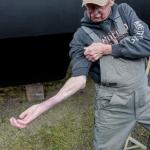
“Last year a fish broke my hand,” Bayer said. “I was fighting a 30-pound salmon on a 24-foot piece of line, doing it by hand, and that sucker popped three bones in my hand. This winter I had to get three bones taken out and it’s taken forever for my wrist to get better.”
His scariest moment while fishing — a time when Bayer thought he would die aboard the F/V Maui — occurred while crossing the Columbia River Bar after leaving Westport two years ago, when Bayer thought he would perish in 15-foot swells in the dark.
“There were white breakers all around the boat and everything inside hit the floor,” he said. “It was terrifying. When I got back to the dock, my transmission went out. If it would have went out in the bar, I would have died. I timed the tide wrong and didn’t realize it was going to be so bad.”
Earl Soule
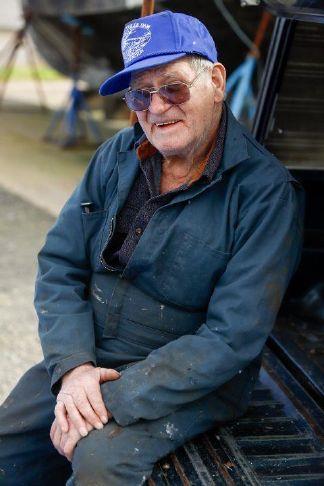
In January, Earl Soule turned 80 years old, but the former logger and commercial fisherman-turned-shipwright hasn’t slowed much, providing rare wisdom and craftsmanship for an increasing number of salmon fishermen preparing their wooden trollers for the season ahead.
“There’s only three of us left that do this work,” said Soule, 80, sitting on his truck tailgate next to a two liter of Barqs Root Beer and an economy-sized bottle of Tylenol. “One of them is 94 and the other is 73. When we’re gone that’s it, there ain’t no more. It’s been a long, hard pull…when you pretty much do these things all your life. All my life I’ve either been fishing or logging — or beating nails into these things.”
‘I would do it again’
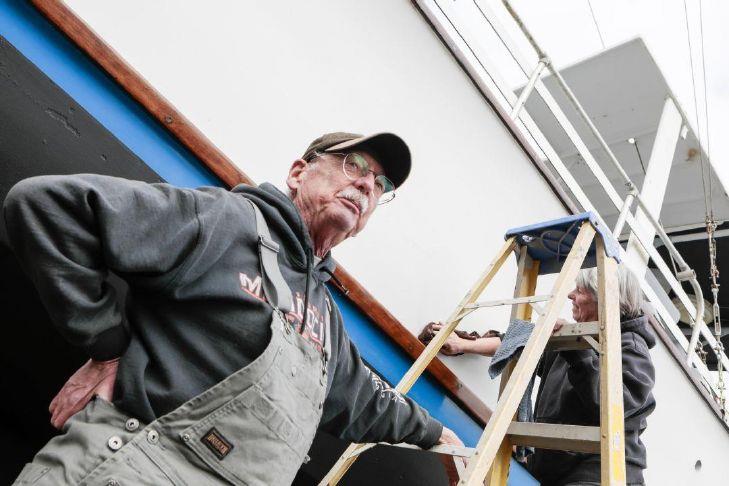
In their final act together alongside the F/V High Hope, the Reisbicks were still a team.
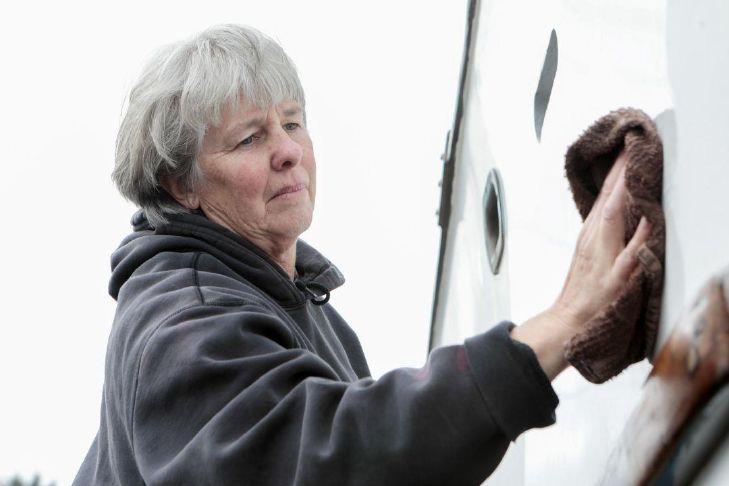
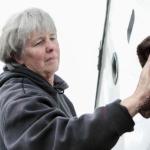
Heidi Reisbick gently wiped the bow with a cloth as her husband Kim braced the ladder and spoke about a special boat tucked in the back of the Ilwaco Boatyard, a vessel that served as a floating sanctuary during seasons of adventure between Alaska and California for the commercial fishing family.
“She and I would go together. We fished four states, have a freezer on the boat,” said Kim Reisbick, of Chinook, standing next to the 47-foot commercial troller, a vessel he helped build personally as a former employee at the Westport Shipyard in 1979, before eventually becoming the owner. In the coming years, the boat would become more than a vessel to catch fish — it would also be home to rabbits and gerbils, after the birth of one baby girl.
“We raised our daughter on the boat,” Kim said. “We would travel from Alaska to California. It’s been an awesome life. If I had a do-over again, I would do it again. We feel very fortunate.”
The vessel, homeported in Ilwaco since 1991, was sold to a new owner in Oregon earlier this month, closing a chapter for Chinook family.
“We’re going to miss it,” Heidi summed.
The big change
Kim, now retired from commercial salmon fishing, cited the curtailed seasons as the biggest change from when he started in 1973.
“We have only about a quarter of the season, compared to when we started,” he said. “I started in 1973, that’s when the Boldt Decision (a landmark 1974 case that ordered Washington to uphold its treaties, affirm Indigenous salmon fishing rights and recognize Native nations’ sovereignty) was implemented. All the old timers told me I was a fool, that I would never make a dime, but you just adapt and it’s worked out.”
The times have changed for young fishermen seeking a start in commercial fishing today, with rising initial investment costs compounded by curtailed seasons.
“Back in the 70s, you could build a brand new boat like this for $75,000 (roughly $600,000 today), then go out and gross $100,000 and pay for it,” Kim said. “To have a boat like this built now, it would be over $1 million, and you’re lucky if you can still go out and gross $100,000 trolling. That’s the biggest difference.”
‘It was like a wall of fish’
As for the best season? Well, that was 1988, Kim recalled fondly, a time when abundant fish and favorable market prices both met.
Though they primarily targeted smaller and mid-size salmon commercially, the biggest they ever landed was a King salmon approaching 50 pounds, with some of the most unusual catches including Humboldt squid and opah.
One of the most memorable trips occurred while traveling up to Oregon from California, near the Heceta Bank, a rocky bank renowned for biodiversity roughly 30 miles off the coast of Florence, Oregon.
“It was like we hit a wall of fish,” Kim said. ‘We filled the boat up with 14,000 pounds.”
‘We figured out how to work together’
In 2002, the Reisbicks were fishing in Bodega Bay, California, with their then-young daughter when an accident nearly ended Kim’s life and livelihood.
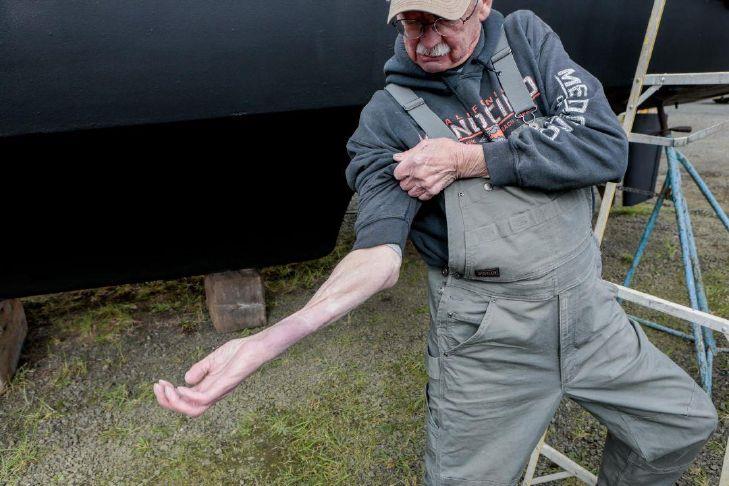
“I got my arm caught in the winch and it broke the bone all the way up to my shoulder,” Kim reflected. “The doctor said I would never work again. I was laying there in the hospital bed thinking ‘what am I going to do?’ But we figured out how to work together, and it worked out.”
“Now he can’t get rid of me,” Heidi added.