Coast Chronicles: Graupel and groundhogs: our fascinating earth
Published 6:36 pm Sunday, January 18, 2026
“There are more things in heaven and earth, Horatio, than are dreamt of…” — Shakespeare’s Hamlet, Act 1, Scene 5.
Many of us thought that perhaps the beginning of a new year might give us a short respite from chaos, political divisiveness, and sorrow. Nope, no rest for the weary.
First the Maduro capture and stealing Venezuela’s oil; then Trump’s continued saber-rattling over Greenland, endangering our relationship with one of our (heretofore) staunchest allies, Denmark, and likely all of the EU; then the murder of Renee Good; then Trump’s challenge to the Federal Reserve Board’s independence from executive oversight; then, closer to home, the horror of Jeff Archer’s arrest… then… OK, wait. Let’s start again.
Grap-what?
We do need a break. We need to put the spotlight on a couple tender and fascinating aspects of the world that do not make us want to curl up with spiders in the corner of a dark garage.
So, here’s item No. 1. Note, I am still down in southwest New Mexico and have been shivering through very cold nights but loving the very sunny days. Basically, I’ve considered my current job to be resting and healing after a couple years of major surgeries. This involves eating right, drinking lots of liquids, walks with Jackson, reading, writing and getting to know new friends.
The other day, minding my business (AKA napping), I was awakened by a horrific ratatatting on the roof and windows of my humble abode. I opened my eyes to see hail pounding down from a menacing-looking sky. A moment later I got a call from a long-time southwest desert resident and friend, “Are you seeing the graupel?” My response, “What?!”
As a wordsmith, I pride myself on knowing a few things about the English language, but I had never even heard this word before. “Graffel… scrapple…. grabfull…?” “No, graupel!” she said, “Look it up.” So I watched a YouTube weather report.
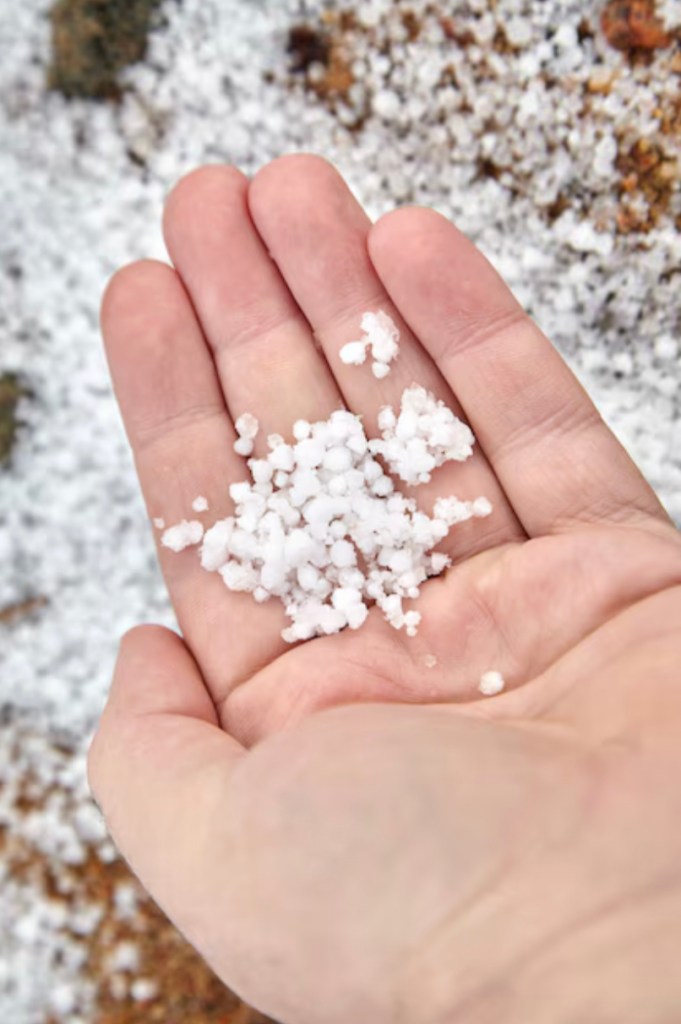
There is evidently a whole other type of precipitation that I was not even vaguely aware of. Something between snow and hail. Something which takes a unique combination of very cold and very odd environmental factors to create — called, yes, graupel (pronounced gra-pelle). It comes down looking like hail in neat little round pebble shapes; but, unlike hail, when you squeeze it, it is soft and pillowy like a teeny tiny marshmallow.
The formation of graupel is a very specific process. First you need supercooled water, which also sounds sort of magical. It is water cooled so low that it just zooms right by solidification and remains in a liquid form — basically it has gone on below its freezing point without becoming frozen. OK, that sounds impossible right there. But in Silver City, New Mexico on the Continental Divide at 6,000 feet, we’d been having night and early morning temps around 20 degrees; conditions that can produce supercooled water. This supercooled water develops in layers high in the atmosphere. Then if, in the clouds above, snow begins to fall, those falling snowflakes collect supercooled water droplets on the way down forming into little balls of graupel, also called soft hail, hominy snow, granular snow, or snow pellets.
Another description says it this way: the process starts with snow crystals; then these snowflakes must fall through a layer of supercooled water droplets which collect onto the snowflakes, coating them and forming soft opaque balls. (I think this is also called rime.) According to info online, graupel is more common in “some mountainous or maritime climates,” so you’d think we’d know about it in the PNW. In drier continental areas or desert climes, it’s a rare event.
Rare or not, the day graupel fell in Silver City it wasn’t that cold on the ground, but it seems up in the clouds strange things were happening, proving to me once again that it’s never too late to learn something new or to be amazed by our extraordinary earth.
Groundhogs
Also in the quirky news file this past week was the headline, “Why New Jersey Is Running Out of Groundhogs.” Silly me. I did not know there was any other famous groundhog than Punxsutawney Phil, of Punxsutawney, Pennsylvania, who every Feb. 2 predicts the arrival of spring.
The Punxsutawney Groundhog Club claims that Phil has lived for over a century due to a special “elixir of life.” (Groundhogs live on average ten years.). But who knew that New Jersey also had their own groundhog, Milltown Mel; or that since he died at three years old in 2021 they are having trouble finding another groundhog to replace him. (They’re worried about a possible interstate rabies strain that any new chuckling might bring in.)
The more I dug into this story, the more flabbergasted I became. Because, who knew that there are many many other groundhogs across the nation that serve this function. There is Wiarton Willie who lives in Ontario, Canada, and Staten Island Chuck (NYC), more formally known as Charles G. Hog, who lives in the Staten Island Zoo. Mr. C.G. Hog bit the hand of Mayor Michael Bloomberg as officials tried to wake him up to do his duty in 2014. (Heck, I’d be grumpy too.)
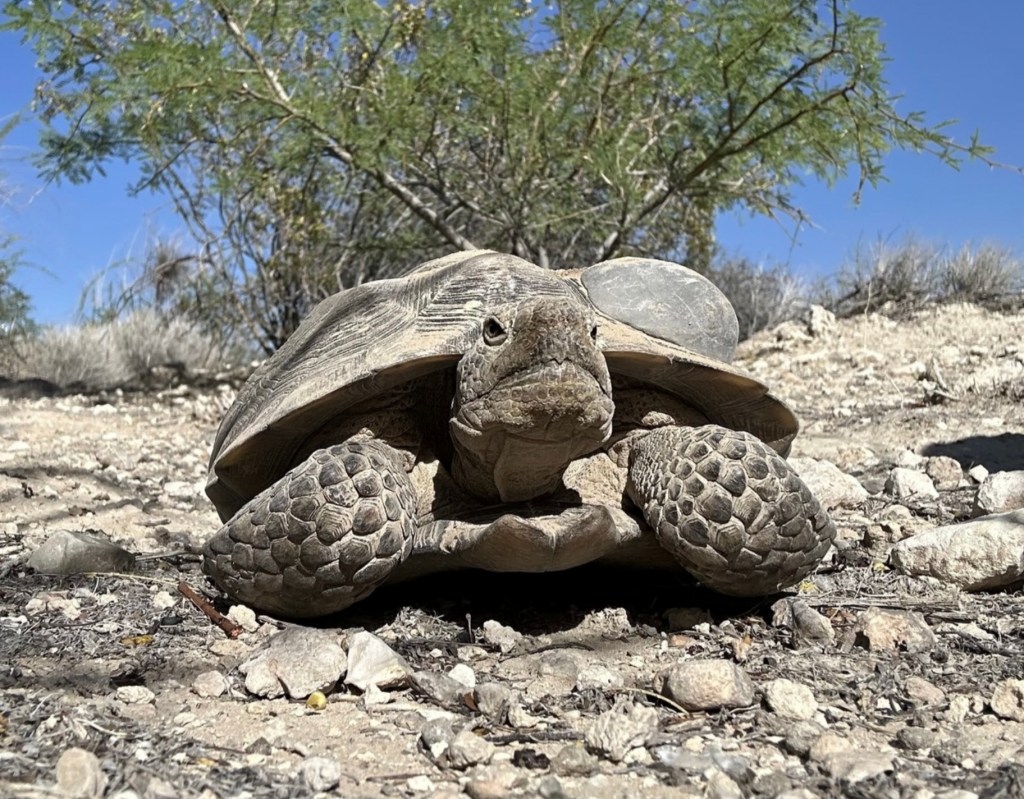
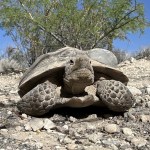
But, curiouser and curiouser, there are other types of weather-predicting animals including, and I kid you not, a Peking duck (Scramble), a 92-year old alligator (Big Al), a tortoise (Mohave Max), an armadillo (Sylvia), a burrowing owl (Athene), a fish (Benny the Bass), an opossum (Sand Mountain Sam), even several stuffed toys, and a puppet. The complete list is here: groundhog-day.com/groundhogs-in-usa; I guarantee that reading through these links will make you momentarily forget your troubles!
NOAA decided to grade the various springtime weather-predictors to check on their accuracy over a range of years. (I’ve always loved the creativity and whimsical nature of scientists. Info here: tinyurl.com/5n9b6wzh, including a complete chart of groundhog stats.) They had two criteria: “they must have been prognosticating for at least 20 years, and they must be active prognosticators as of February 2, 2024. Nineteen groundhogs and alternative groundhogs [stuffed groundhogs, a tortoise, and a prairie dog statue] were selected to participate in this competition using March temperature averages for the U.S. from 2005 to 2024.” Staten Island Chuck (he was replaced after his biting incident and untimely death) rose to the top with an accuracy rating of 85%.
Unfortunately, our only PNW candidate, “Snohomish Slew,” a frognosticating bullfrog, who makes an annual weather forecast in downtown Snohomish did not make it into the top 20. Nonetheless, as Slew’s PR team writes, “on February 2nd there is much accompanying pomp and ceremony. Thayer Cueter, Slew’s handler says, ‘The pinnacle of the celebration moment [is] when Slew whispers his frogcast to his favorite scribe in Groundfrogese. The gathered crowd will be ribbeted (!) by every transcribed word from Slew as he accurately predicts our winter weather fate for six more weeks.’”
A modest proposal
The “Benny the Bass” ceremony in Buckeye Lake, Ohio kicks off Winterfest there. As stated, “Unlike the traditional ‘shadow’ method preferred by land-going prognosticators, Benny’s prediction is based on his breakfast. ‘I pour a bunch of minnows into this big tank,’ says Mike Fornataro, Chair of Winterfest, ‘Then people chant, “Take the bait, spring can’t wait.” And Benny has three minutes to eat a minnow. If he does, it’s an early spring. If he doesn’t, it’s six more weeks of winter.’”
I see no reason why Pacific County can’t create its own Feb. 2 tradition in these gray months when tourists are more likely sitting home reading a good book by the fire than visiting us. Why not Ollie the Oyster (could he/she see his shadow with his shell closed)? Sam the Salmon or even Porky Porcupine? I’ll bet Peninsula Wildcare could produce a suitable PNW animal for our ceremony, provided it also received part of the tourist proceeds. Though we could simply use a large stuffed oyster and not get tangled up with PETA.
Anyway, I leave you with these considerations — and encourage your exploration of other earthly whimsies — when you want to divert your thoughts from the current newsfeed.